Written by Cully McDermid
20 October, 2026 -
To celebrate International Chefs Day, we spoke to Matt Tiller, Head Chef for the Good Eating Company at the Business Design Centre.
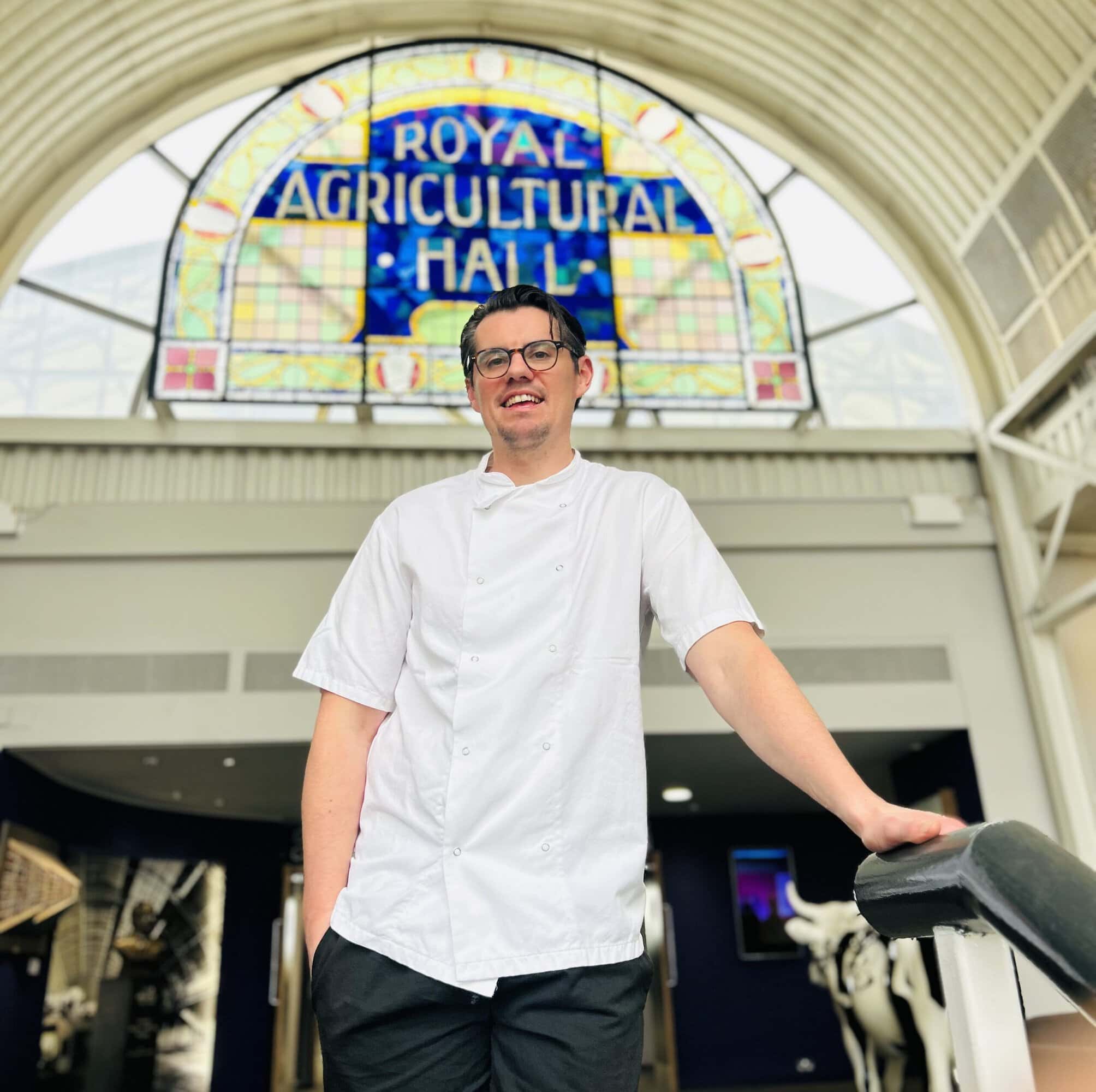
This International Chefs Day, we’re taking a moment to celebrate the talented people behind every menu, lunch and pizza slice at the Business Design Centre.
For more than 25 years, our catering partner, The Good Eating Company (GEC), has played a key role in delivering food and hospitality across the venue, operating our onsite café, Jack’s Restaurant, and feeding thousands of visitors during major exhibitions and conferences.
We sat down with Matt Tiller, Head Chef for GEC at the Business Design Centre, to learn more about his journey into the industry, any top tips on how to prepare for busy events, and what he loves most about life in the kitchen.
Meet our Head Chef, Matt Tiller
Can you introduce yourself and tell us about your role at GEC, including how long you have been working in the industry?
My name is Matt Tiller, Head Chef for The Good Eating Company at the Business Design Centre. I’ve worked in the culinary industry for more than 15 years, with experience spanning restaurants, product development, central production and large-scale event catering.
Leading the kitchen team at the BDC means no two days are ever the same. I oversee food operations across a huge range of events, including conferences, trade exhibitions, awards ceremonies and retail shows, and the prestigious Jack’s Cafe.
During our busiest periods, we cater for several thousand people and this requires a fine balance, leading our culinary team, meticulous operational planning, and crafting sustainable, seasonal menus using fresh, whole ingredients, all while maintaining high quality delivery at scale.
What first inspired you to become a chef?
I’ve always been drawn to the creativity of cooking and the fact that there’s constantly something new to learn. But honestly, it was the women in my family who truly sparked that passion. From a young age, I spent countless hours baking alongside my Mum and Grandma.
Growing up on the coast played a massive part, too. Living close to Poole Harbour meant I was surrounded by fresh seafood and developed a real connection to food origins early on. Watching fishing boats return with their daily catch and having incredible local produce right on our doorstep gave me a deep appreciation for seasonality and fresh, simple ingredients.
Those early experiences ignited a curiosity about food that has stayed with me throughout my entire career – one that continues to take me in exciting new directions.
Behind the Scenes of Event Catering
When you're feeding thousands of people, precision in every detail becomes non-negotiable.
Matt Tiller, Head Chef for GEC at the Business Design Centre
There isn’t really a typical day at the BDC, which is a big part of what makes the role so exciting. My morning usually starts with reviewing the day’s event schedule and briefing the kitchen team, ensuring everyone is clear on timings, responsibilities and the overall game plan.
On peak event days, we might have thousands of visitors flowing through the building – with high-volume retail catering running concurrently alongside conference hospitality or an evening gala. My focus is keeping a bird’s-eye view over the entire operation: maintaining strict food quality, managing staffing levels, catering to dietary needs and ensuring seamless communication between the kitchen and front-of-house teams.
Preparation is everything when it comes to large-scale event catering. When you’re feeding thousands of people, precision in every detail is non-negotiable.
We always start with the client’s vision and reverse-engineer the operation from there, breaking down guest numbers, service timings, bespoke menus, dietary requirements, staffing, and logistics. It’s all about mapping out exactly how every dish moves from the pass to the guest at the perfect moment.
Flexibility is just as critical as the initial plan. Final numbers change, late dietary needs pop up, and event timings can shift. You can’t predict everything, but strong preparation means the team can handle any unexpected turn without the guest ever noticing a hitch.
Much of my inspiration comes from the diverse corners of the industry I’ve worked, from fine dining restaurants and food product development to international hospitality. Each environment exposed me to unique ingredients, varied cuisines, and new ways of thinking about food.
Seasonality is another major driver. I love discovering what ingredients are peaking at any given time and building dishes around them, rather than forcing an out-of-season item onto a menu year-round.
Equally, I believe in creating space for our chefs to express their own creativity. Our rotating retail menus serve as a fantastic testing ground for fresh ideas, giving the entire culinary team a voice and a platform to collaborate, rather than relying solely on top-down direction.
How does catering contribute to the overall visitor experience at an event?
Food is far more than an operational detail, it’s a core element of the overall guest experience. Catering provides essential moments throughout a busy event for visitors to pause, refuel, and engage in meaningful conversation. Exceptional food creates a welcoming atmosphere that leaves a lasting impression long after the event finishes.
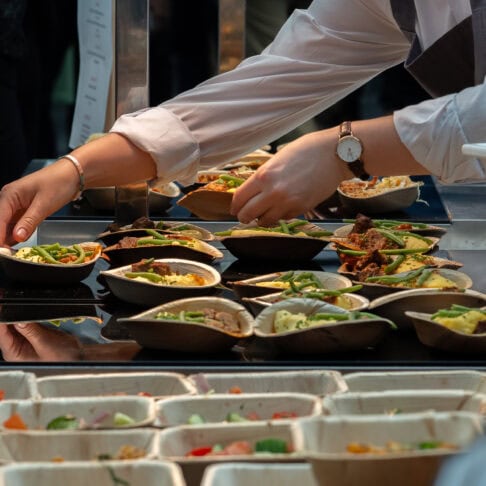
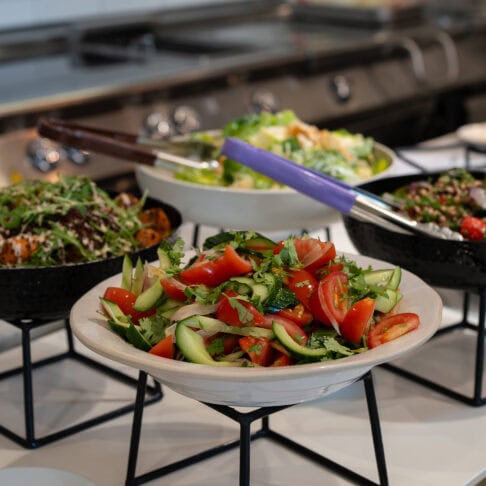
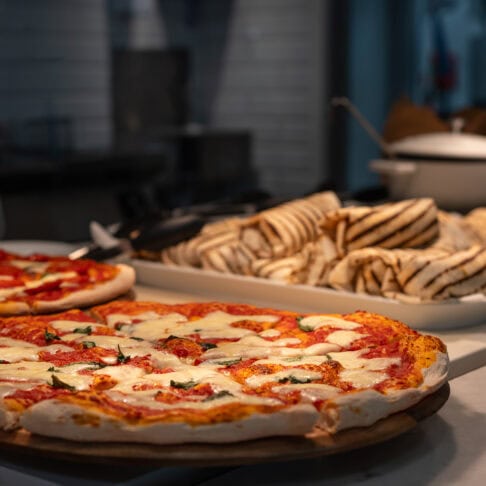
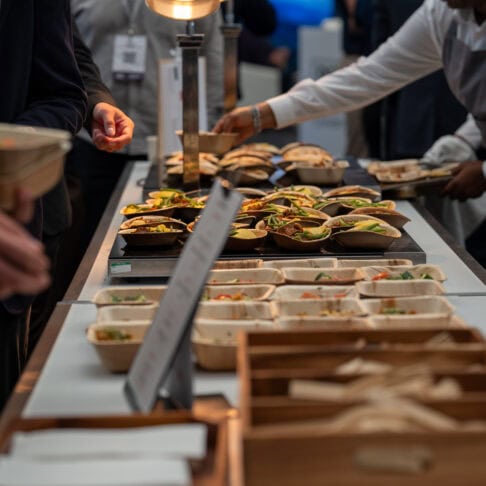
Sustainability: From Field to Fork
Sustainability is a major consideration across the food and hospitality sector, and it’s an area where the Good Eating Company continues to innovate.
We believe that sustainability isn’t simply something to highlight on a menu. It shapes the decisions being made behind the scenes every day, from choosing ingredients and developing dishes to reducing what goes to waste.
At the heart of this approach is the Green DDR package, built around seasonal British produce, reduced-meat menus, local suppliers, repurposed ingredients and compostable packaging. With more than 100 low-carbon recipes already developed, the Green DDR now accounts for around half of all DDR bookings, showing that more sustainable choices can be just as appealing to guests.
That thinking starts with what’s available closer to home. Wherever possible, we aim to work with suppliers within a 25-mile radius, putting seasonal British ingredients at the centre of the menu. Rather than deciding on a dish first and sourcing ingredients from further afield to make it work, chefs are encouraged to flip the process: what’s in season, what’s at its best right now, and what exciting dishes can be created with it?
It’s an approach that not only supports local sourcing but also gives the culinary team an opportunity to be more creative.
Just as much thought goes into what doesn’t make it onto the plate. Using Leanpath, the team can accurately measure and track food waste, giving them real data to inform smarter kitchen decisions. Surplus ingredients are also given another purpose wherever possible, including fresh produce from The Good Eating Company’s own farm. Together, these initiatives demonstrate that sustainability doesn’t have to come at the expense of exceptional food or commercial success. Instead, all three can work hand in hand.